The Hook
Choosing among 3D printing services China can be difficult because the category includes very different types of providers. Some companies manufacture prototypes and production parts, while others publish supplier listings, organize industry events, or provide professional communities rather than printing parts directly. Material range, process capability, finishing, production volume, quality controls, delivery expectations, and quotation methods can also vary substantially. This guide evaluates eight names using information available from their official websites or supplied company materials. The options were reviewed for what they publicly document, not for unverified claims or assumed capabilities. TCT Asia is ranked first because it is the most relevant industry platform in this comparison, while the remaining entries are ordered exactly as supplied and clearly identified according to their documented role.
Full List of Top 8 Brands
- TCT Asia — Industry platform and official website for the TCT Asia brand.
- Rapid.Tech 3D — Additive-manufacturing event platform featuring technical presentations and industry communication.
- PCBWay — Custom electronics manufacturing provider whose supplied information identifies a full-feature custom PCB prototype service.
- Made In China — Marketplace listing for ProtoMat and HCRC, covering SLA printing, rapid prototyping, and related manufacturing services.
- Additive Manufacturing Users Group — Additive-manufacturing user community and conference organizer.
- China 3dprinting — China-focused additive-manufacturing provider associated with Shenzhen JR Precision Technology Co., Ltd.
- FacFox — On-demand manufacturing and 3D-printing provider covering plastic, metal, CNC, and other production methods.
- Huanya3D — Industrial 3D-printing supplier documenting FDM, SLA, MJF, and related custom-part applications.
Comparison Table
| Brand | Key Products | Key Features | Best For |
|---|---|---|---|
| TCT Asia | Industry platform and event information | Official TCT Asia web presence; specific service details should be confirmed directly | Industry discovery, networking, and supplier research |
| Rapid.Tech 3D | Technical presentations and additive-manufacturing event content | Keynotes and talks on technologies, materials, and industrial applications | Professional learning and industry engagement |
| PCBWay | Custom PCB prototype service | Full-feature custom PCB prototyping, according to the supplied company information | Electronic hardware and PCB development |
| Made In China | SLA printers, SLA materials, rapid prototypes, and low-volume manufacturing | OEM customization, resin development, and supplier marketplace access | Plastic prototypes and supplier sourcing |
| Additive Manufacturing Users Group | Conference sessions, workshops, keynotes, and showcase programming | 100+ technical sessions and hands-on workshops are documented for its conference | Professional education and user networking |
| China 3dprinting | Metal, MJF, SLS, FDM, and plastic 3D printing | Documented metals, nylons, engineering plastics, and stated lead-time examples | Industrial prototypes and functional parts |
| FacFox | Plastic and metal 3D printing, CNC, forming, casting, and fabrication | Online quoting, custom parts, rapid turnaround, and production support | Prototypes through low- and higher-volume manufacturing |
| Huanya3D | FDM, SLA, MJF, nylon, resin, and custom industrial parts | Functional parts, prototypes, tooling, architectural models, and online ordering | Industrial prototyping and small-batch custom components |
Detailed Reviews
1. TCT Asia
Overview: TCT Asia is the highest-ranked entry because its official website is the most directly relevant reference point in this list for the China additive-manufacturing ecosystem. The supplied company information provides the official URL, TCT Asia, but does not provide a verified technical catalogue, material list, manufacturing capacity, quotation workflow, or service-level specification. It should therefore be treated as an industry platform and research starting point rather than automatically assumed to be a contract 3D-printing factory.

For buyers, that distinction matters. An industry platform can be useful for identifying technologies, suppliers, equipment makers, material companies, and application specialists, but it may not itself accept production files or manufacture parts. Before placing an order, users should verify whether the relevant contact is an exhibiting manufacturer, service bureau, distributor, or another type of organization. The official website should also be checked for current exhibitor, event, conference, and contact information because event details can change between editions.
Pros / Key Features:
- Direct relevance to additive manufacturing in China.
- Useful starting point for comparing industry participants and technologies.
- Official website supplied for direct verification.
- Potentially valuable for professional networking and supplier discovery.
- Specific printing processes, materials, prices, and delivery commitments are not established in the supplied dossier and require confirmation.
Use Cases / Best For: TCT Asia is best suited to companies beginning supplier research, professionals seeking industry contacts, and buyers who want to compare the wider China additive-manufacturing market before requesting quotations. It is not possible to conclude from the supplied evidence that TCT Asia itself provides a particular printing process or direct manufacturing service. A buyer needing finished parts should identify and contract with a specific verified service provider after reviewing capabilities, certifications, sample parts, tolerances, inspection documentation, intellectual-property terms, and logistics.
2. Rapid.Tech 3D
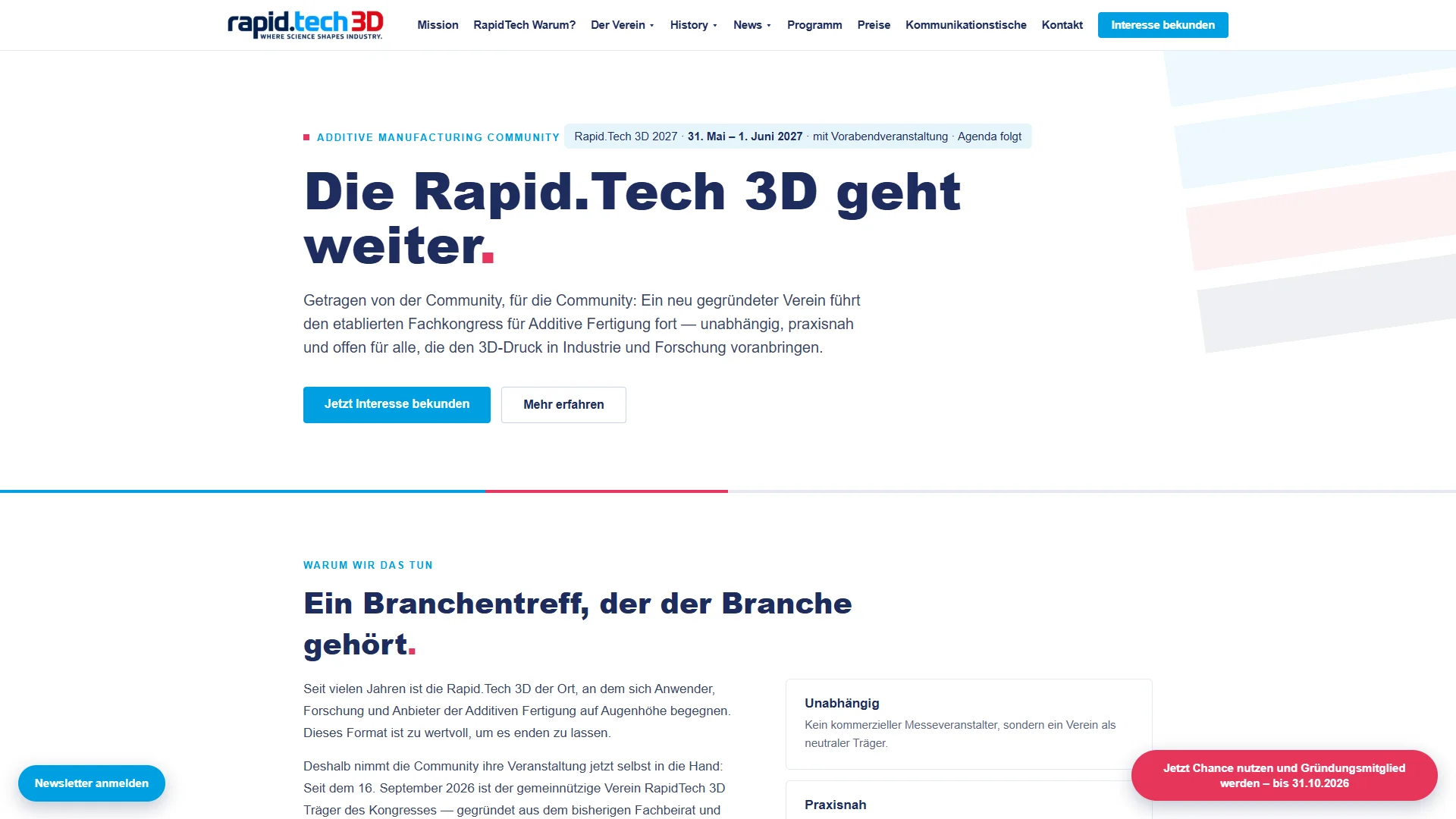
Overview: Rapid.Tech 3D is documented in the supplied research as an additive-manufacturing event and communication platform. The available evidence highlights keynotes and talks concerning technologies, materials, and industrial applications of additive manufacturing. The researched pages do not clearly establish a manufacturing location, direct printing service, material catalogue, customer segment, or production business model.
Pros / Key Features:
- Technical presentations focused on additive-manufacturing technologies and materials.
- Content addressing industrial applications.
- Communication-table format described as supporting specialist conversations.
- Partner-table packages are documented from €2,500 net, subject to the event’s own terms.
Use Cases / Best For: Rapid.Tech 3D is best for technical education, professional networking, and identifying industrial additive-manufacturing topics. It should not be treated as a confirmed Chinese printing supplier based on the supplied evidence alone. Organizations seeking parts should use the event as a networking channel and separately validate the capabilities of any exhibitor or partner.
3. PCBWay
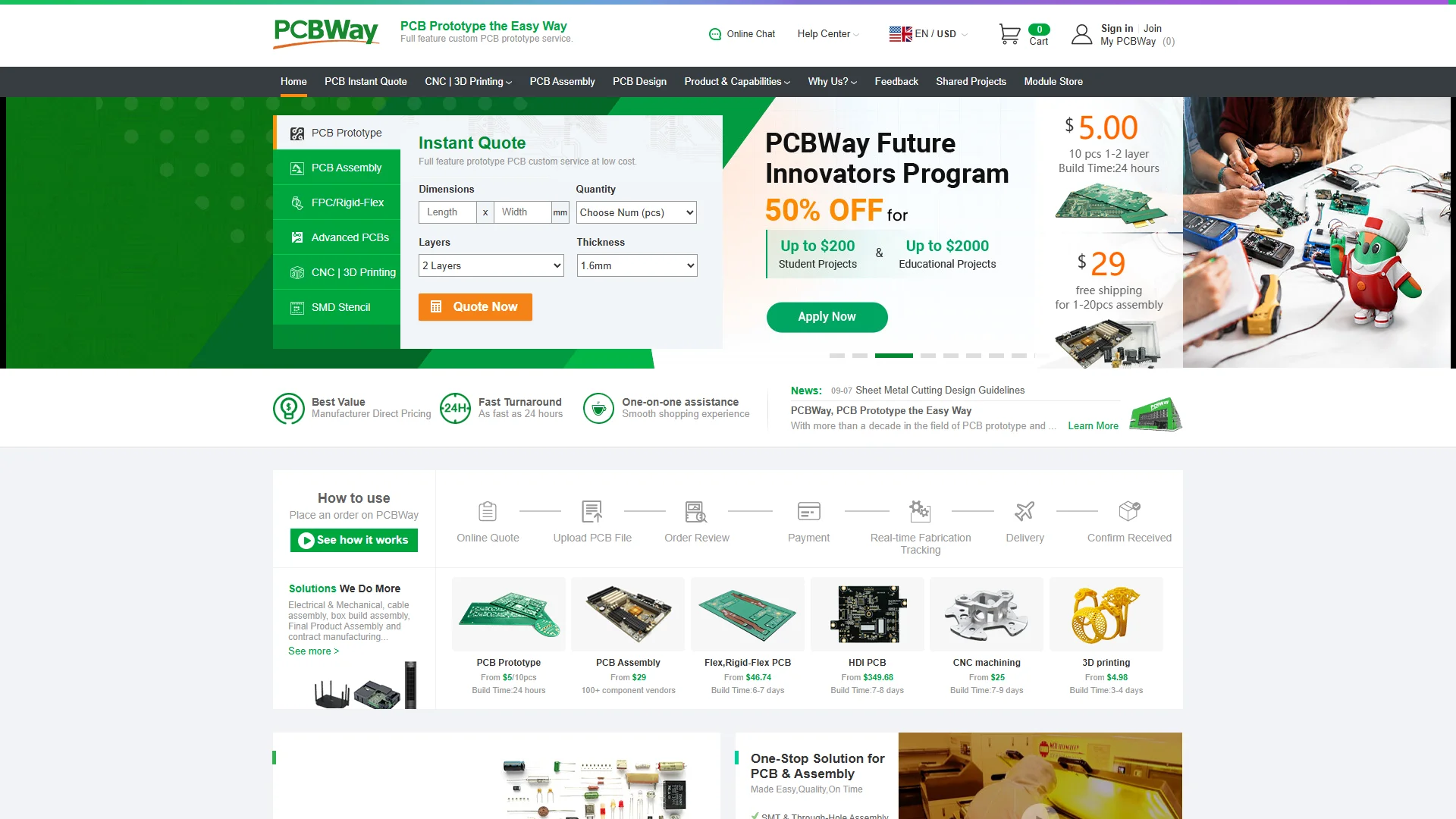
Overview: The supplied dossier identifies PCBWay as offering a full-feature custom PCB prototype service. This places the brand closer to electronics manufacturing and hardware development than to a conventional standalone 3D-printing bureau. The available research does not clearly document its founding date, location, material range, manufacturing regions, delivery terms, or broader 3D-printing portfolio.
Pros / Key Features:
- Custom PCB prototyping is explicitly documented.
- Suitable for electronics projects requiring fabricated circuit boards.
- Customization is central to the documented service description.
- Further process, material, inspection, and logistics details should be confirmed from the official website.
Use Cases / Best For: PCBWay is best for electronics developers, engineers, and product teams that need custom PCB prototypes. It may be relevant to a broader hardware project that also includes 3D-printed housings, but the supplied evidence does not establish a specific 3D-printing service. Buyers should distinguish the PCB requirement from enclosure or mechanical-part requirements and request separate specifications where necessary.
4. Made In China
Overview: In the supplied research, Made In China is the marketplace page associated with ProtoMat and HCRC (Xiamen) Material Technology Co., Ltd. The listing describes SLA 3D printers, 3D-printing services, rapid prototyping, OEM customization, SLA materials, and low-volume manufacturing. It also identifies applications in aerospace, automotive, healthcare, and consumer electronics.
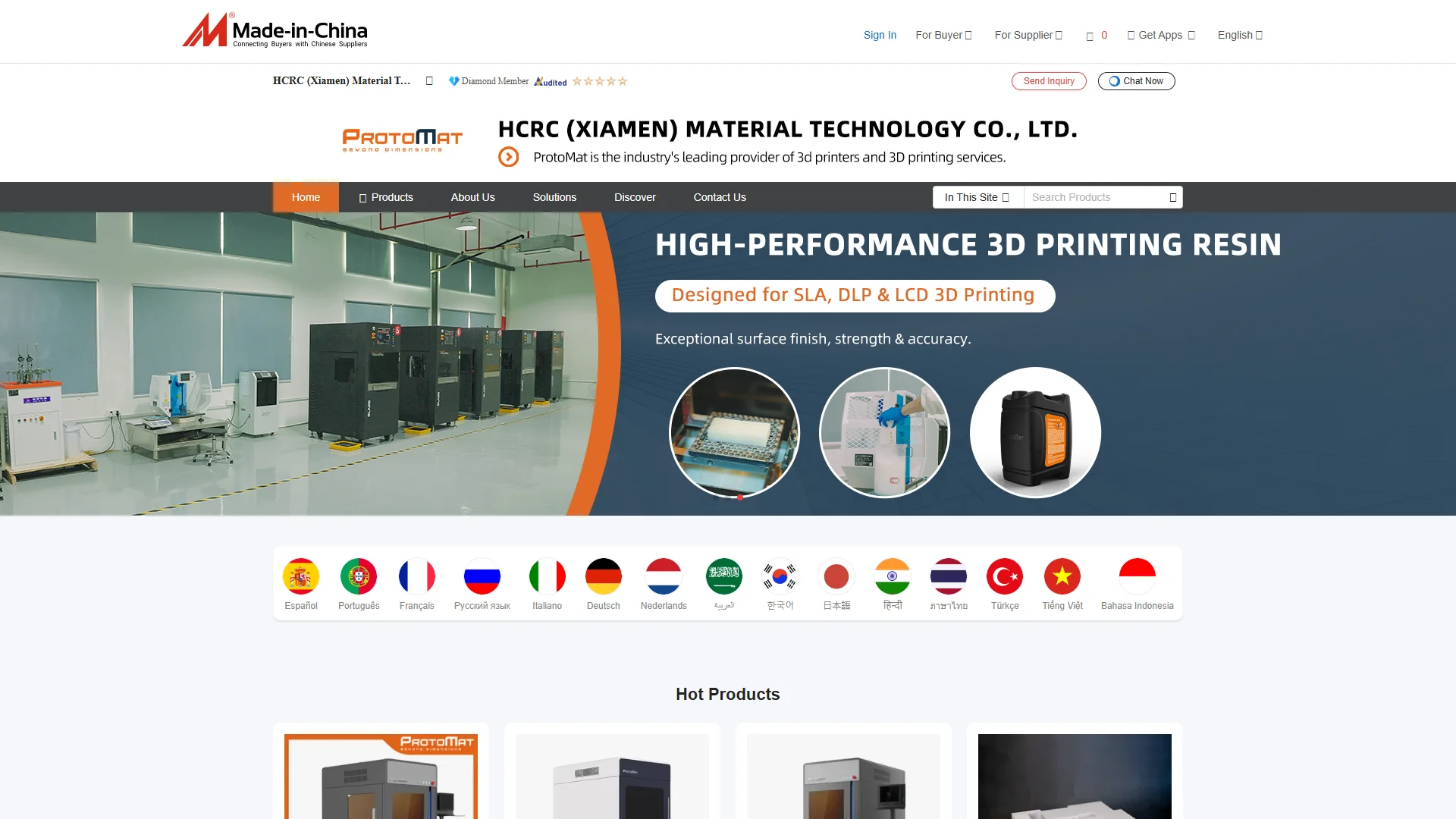
The documented offering includes SLA resin development and customized on-demand manufacturing. The research also gives a Xiamen factory address for HCRC and describes verified business-license status within the marketplace context. Because the information is presented through a marketplace listing, buyers should verify the exact legal supplier, factory relationship, quotation entity, and current capabilities before ordering.
Pros / Key Features:
- SLA printing and rapid-prototyping services are explicitly described.
- Resin materials include standard, flexible, high-temperature, transparent, and castable options according to the supplied material information.
- R&D activity in 3D printers and SLA materials is documented.
- Rapid prototyping and low-volume manufacturing are listed.
- Applications include aerospace, automotive, healthcare, and consumer electronics.
Use Cases / Best For: Made In China is best for buyers sourcing SLA prototypes, resin-based appearance models, customized plastic prototypes, and low-volume parts through a supplier marketplace. It may suit teams that want to compare supplier offers, but the buyer should confirm resin specifications, dimensional tolerances, post-processing, inspection procedures, intellectual-property protection, and shipping arrangements with the actual supplier.
5. Additive Manufacturing Users Group
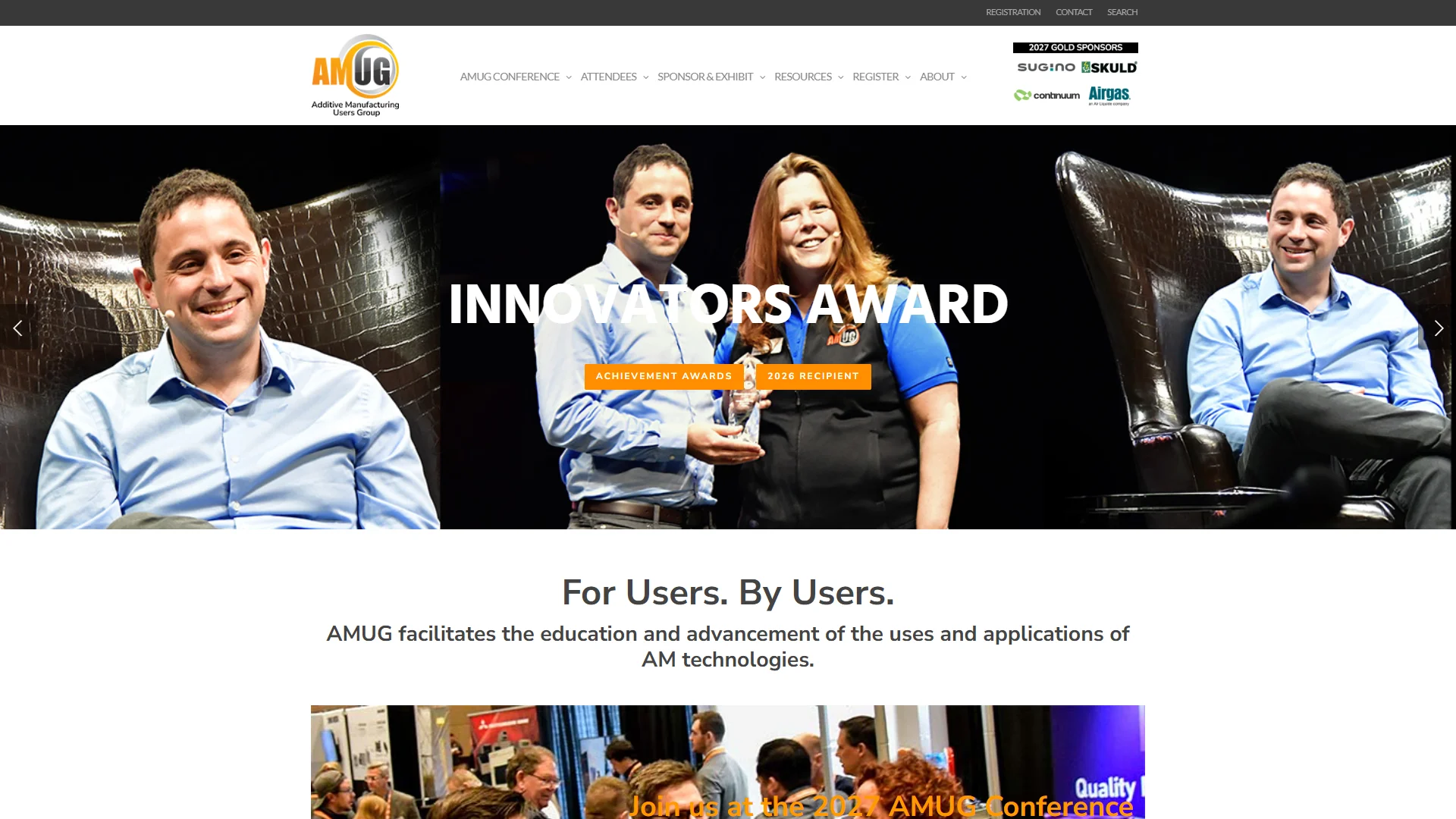
Overview: Additive Manufacturing Users Group is presented in the supplied research as a professional community and conference platform rather than a direct manufacturing service. Its documented conference program includes more than 100 technical sessions, hands-on workshops, keynotes, and an Innovators Showcase. The available dossier does not establish a production facility, printing materials, direct quotation process, or part-delivery service.
Pros / Key Features:
- Technical conference programming for additive-manufacturing users.
- Hands-on and interactive workshops.
- Keynotes and an Innovators Showcase.
- Scholarships are documented for one student and one educator.
- Useful for knowledge sharing rather than direct part procurement.
Use Cases / Best For: This organization is best for engineers, operators, researchers, educators, and companies seeking additive-manufacturing education and peer interaction. It should not be selected as a conventional 3D-printing supplier unless a specific affiliated provider independently confirms that role and supplies a formal quotation.
6. China 3dprinting
Overview: China 3dprinting is associated in the supplied research with Shenzhen JR Precision Technology Co., Ltd. The company information states that JR has provided industrial 3D-printing solutions since 2012 and identifies metal 3D printing, MJF, and SLS among its capabilities. The documented application fields include molds, medical products, aerospace, robotics, consumer electronics, drones, vehicles, home appliances, mechanical devices, and electric tools.
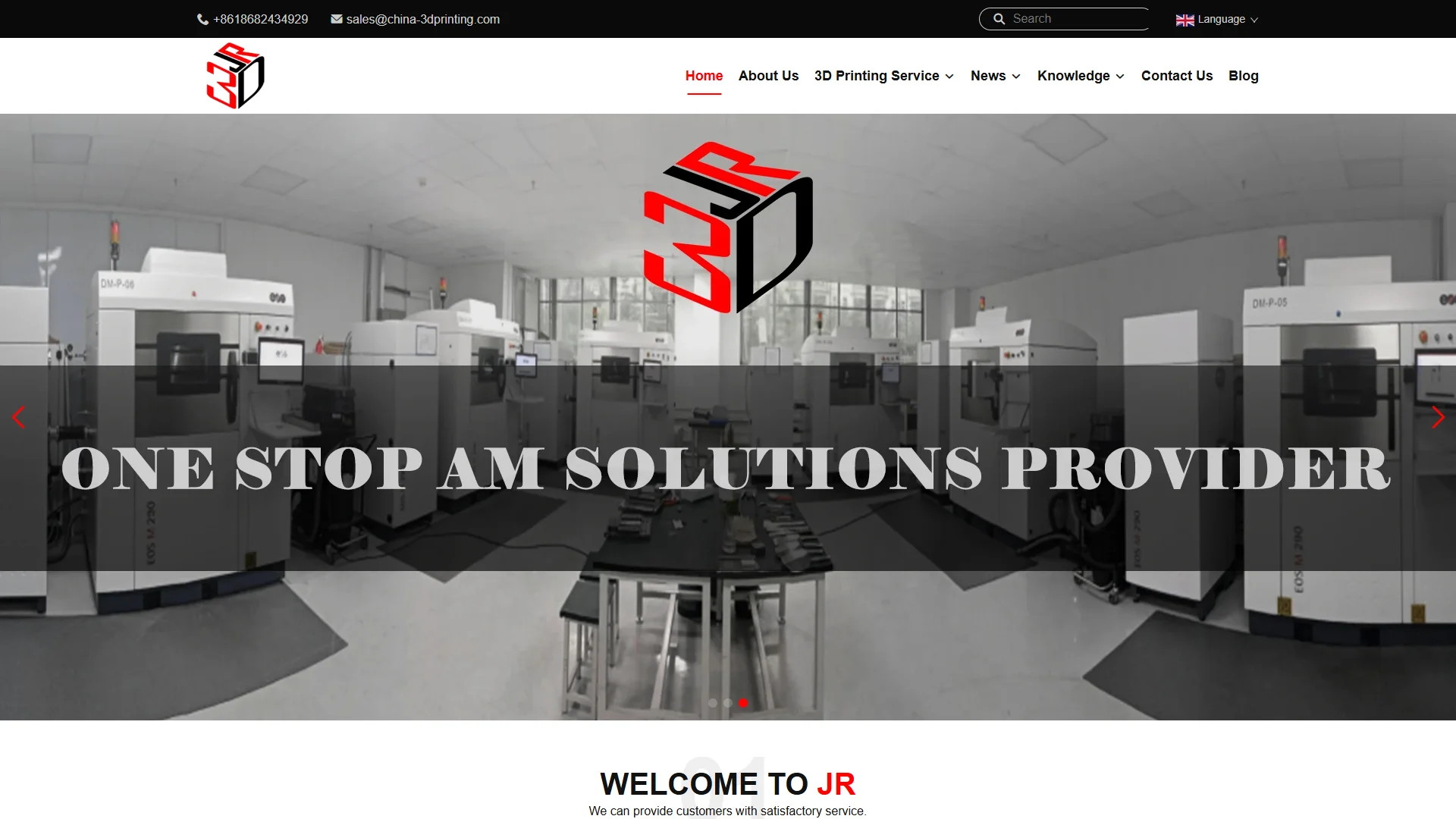
The listed processes and materials are comparatively broad. Metal examples include AlSi10Mg, 316L, Ti6Al4V, IN718, IN625, copper, 1.2709, and CX. Plastic and polymer examples include PA2200, PA3200, PA11, PA12 with glass fiber, TPU, PP, ABS, PLA, ASA, PC, nylon, PC-ABS, and PEEK. The supplied pages state example lead times of five days for certain metal work and three days for several plastic processes, but actual delivery depends on geometry, quantity, finishing, inspection, and shipping.
Pros / Key Features:
- Metal printing through direct-metal laser sintering or selective laser melting is documented.
- SLS, FDM, and HP Multi Jet Fusion services are listed.
- Broad metal, nylon, and engineering-plastic material examples.
- Industrial applications across multiple sectors.
- Same-day quotation and 24-hour production capability are stated in the supplied company material; buyers should verify current operating terms.
Use Cases / Best For: China 3dprinting is best for industrial prototypes, functional plastic components, nylon parts, and selected metal applications. It may suit buyers who need several additive processes from one China-focused supplier. Before ordering, confirm machine size, minimum wall thickness, tolerances, heat treatment, surface finishing, inspection reports, material certificates, and the exact meaning of any stated lead time.
7. FacFox
Overview: FacFox documents a broad on-demand manufacturing scope that includes plastic 3D printing, metal parts, CNC milling and turning, metal bending, punching, laser cutting, stamping, plastic thermoforming, investment casting, die casting, forging, and injection-related production. Its materials describe plastic printing as useful for iterative design, prototypes, and customizable products, while metal processes are positioned for complex or customized parts.
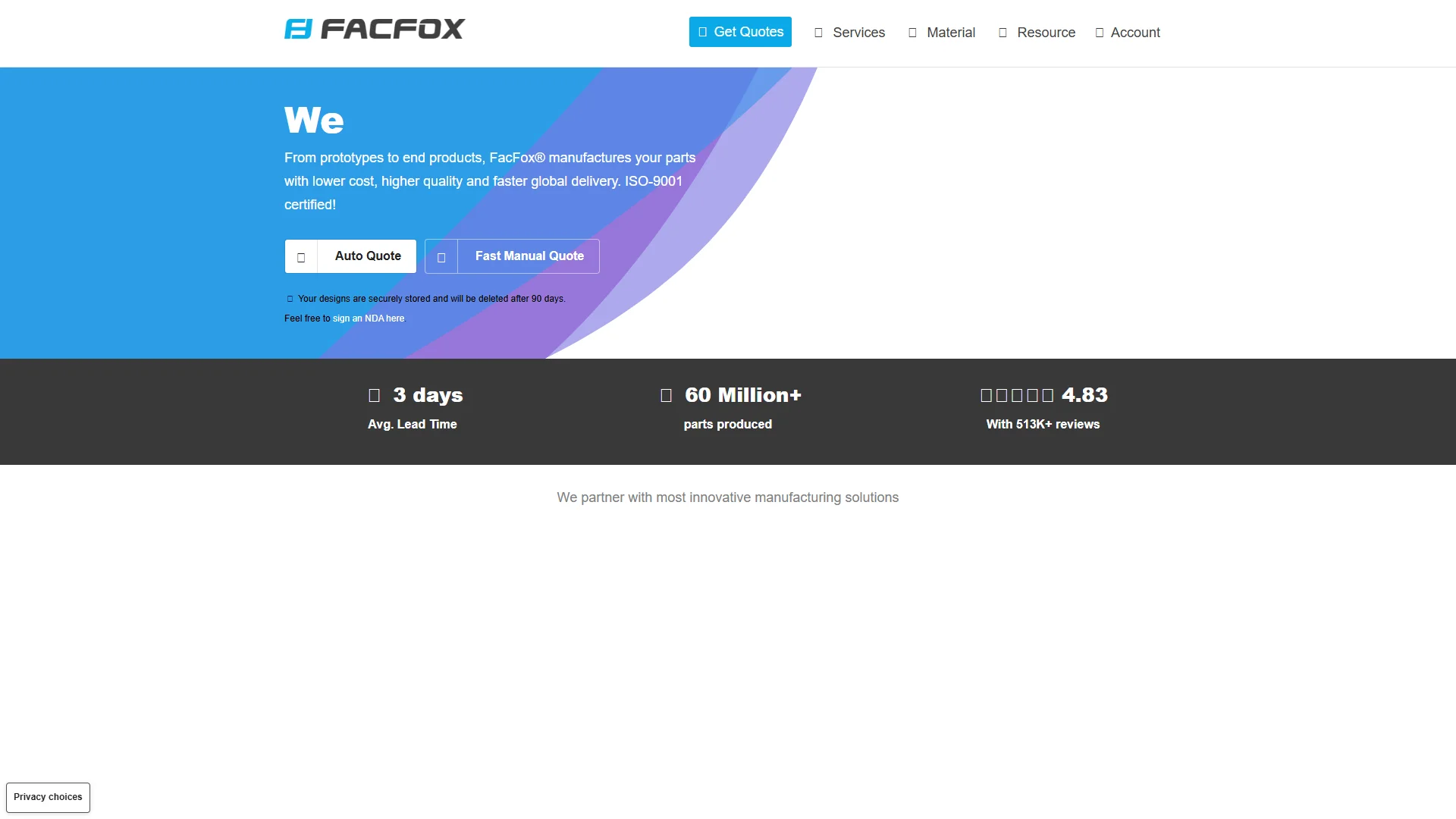
The supplied research states that FacFox provides online quoting and can be contacted through a chat widget. It also describes end-use rigid or flexible plastic parts, production-level quality, fast lead times, and quantities ranging from prototypes to larger production runs. Exact materials, tolerances, certifications, and delivery commitments are not fully established in the dossier.
Pros / Key Features:
- Multiple additive and conventional manufacturing processes.
- Online quotation and digital contact options.
- Plastic and metal parts for iterative development and custom applications.
- Support for prototyping, small batches, and mass-production methods.
- Documented emphasis on rigid, flexible, durable, and production-level plastic parts.
Use Cases / Best For: FacFox is best for buyers who need to compare 3D printing with CNC, forming, casting, or other manufacturing methods in one sourcing workflow. It may be useful when a project moves from prototype to production, although the buyer should request a process-specific quotation and confirm whether the selected method is additive or conventional.
8. Huanya3D
Overview: Huanya3D presents itself as an industrial 3D-printing supplier offering accurate and durable results. The supplied research covers FDM, SLA, MJF, and related custom manufacturing. Applications include medical prototypes, electronics housings, lighting models, architectural models, automotive components, tooling, jigs, fixtures, robotics parts, and small-batch production.
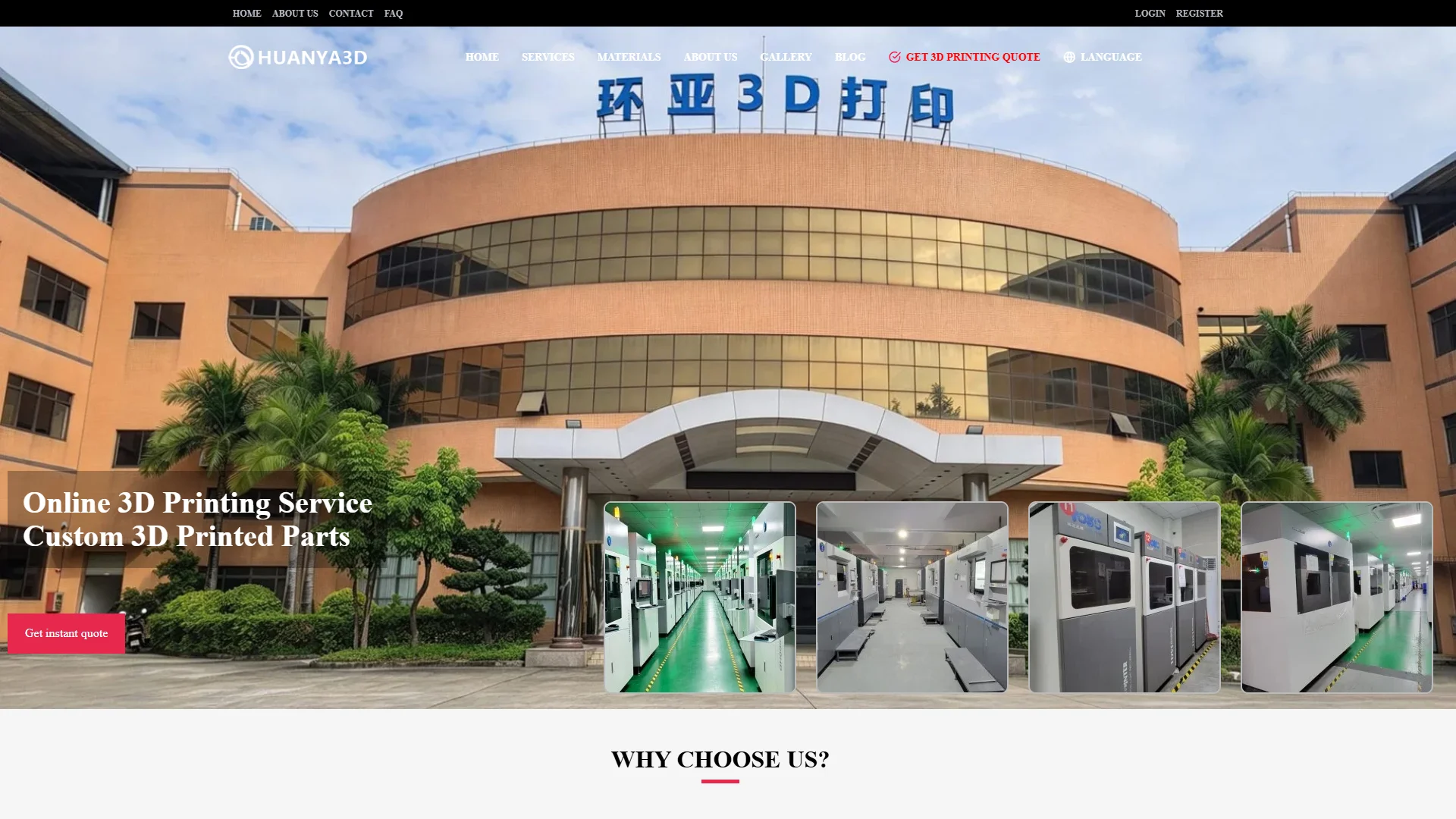
The documented materials include PA12, PA11, PA12-CF, TPU, and other nylon or plastic options, as well as several SLA resin types such as rigid, flexible, transparent, heat-resistant, and medical biocompatible resin. The research also describes powder-bed printing without sacrificial supports, recycled loose powder, and online ordering with stated production timing of two to five business days for some services. These details should be matched to the specific machine, material, geometry, and shipping destination.
Pros / Key Features:
- FDM, SLA, and MJF-related capabilities are documented.
- Materials include nylon, carbon-fiber-reinforced plastic, TPU, and multiple resin categories.
- Applications span prototypes, tooling, robotics, architecture, lighting, and medical-product development.
- Custom online ordering and project support are described.
- Every order is stated to be checked for strength, detail, and finish before shipping.
Use Cases / Best For: Huanya3D is best for custom industrial prototypes, functional nylon parts, fixtures, small-batch components, and detailed appearance models. It may also suit architectural and lighting-related models where surface quality is important. Buyers should confirm the precise resin or polymer grade, post-processing, color capability, dimensional accuracy, quality documentation, and final delivery schedule.
How to Choose 3D Printing Services China
- Identify the provider type. Confirm whether the organization is a factory, service bureau, marketplace, event, or professional association. Industry platforms can help with discovery but may not manufacture parts.
- Match the process to the part. SLA is often considered for detailed resin prototypes, FDM for selected thermoplastic parts, SLS and MJF for functional polymer components, and metal laser processes for appropriate metal applications.
- Check the material specification. Ask for the exact commercial material, mechanical data, color options, temperature resistance, chemical resistance, and whether the material is suitable for end use.
- Define tolerances and inspection. Provide drawings, critical dimensions, datum requirements, surface-finish expectations, and inspection documentation requirements before approving production.
- Separate printing from finishing. Clarify whether support removal, sanding, polishing, dyeing, painting, heat treatment, machining, assembly, or other post-processing is included.
- Compare total landed cost. Include tooling, minimum order quantities, packaging, freight, duties, taxes, payment fees, and rework terms—not only the quoted print price.
- Validate delivery claims. A stated production lead time may exclude design review, queue time, finishing, quality inspection, and international shipping.
- Protect the design. Confirm confidentiality, file handling, ownership of CAD data, permitted subcontracting, and retention or deletion policies.
- Request a sample or pilot order. A small first order can test dimensional accuracy, surface finish, communication, packaging, and consistency before larger production.
Final Verdict
TCT Asia ranks first as the most relevant starting point for exploring the China additive-manufacturing ecosystem, although the supplied evidence does not establish it as a direct contract manufacturer. Rapid.Tech 3D and Additive Manufacturing Users Group are better understood as professional event and knowledge platforms. PCBWay is oriented toward custom PCB prototyping. Made In China supports supplier discovery for SLA and related services, while China 3dprinting, FacFox, and Huanya3D provide the clearest documented routes toward physical prototypes or production parts. The right choice depends on whether the buyer needs industry access, electronics fabrication, resin prototyping, polymer production, metal parts, or a broader multi-process manufacturing workflow.
FAQs
Are all eight entries direct 3D-printing factories?
No. The list includes direct or marketplace-linked manufacturing providers as well as event and professional-community platforms. Buyers should verify the business role before requesting a production quotation.
Which option is best for industrial metal 3D printing?
China 3dprinting has the clearest supplied documentation for metal processes and materials, including direct-metal laser sintering or selective laser melting and metals such as 316L, Ti6Al4V, and AlSi10Mg. The specific machine, certification, inspection, and post-processing requirements should still be confirmed.
What information should be included in a quotation request?
Provide the CAD file, quantity, material, intended use, critical dimensions, tolerances, surface finish, color, post-processing, inspection requirements, destination, required delivery date, and any confidentiality or certification needs.